
Writing & AI
Writing with AI?
At the Research & Writing Center, our focus remains on helping students develop as thoughtful, confident, and independent writers. AI may become one resource within that process, but it cannot replace the thinking, decision-making, and growth that happen through writing. This page is designed to help students consider how AI can support different stages of the writing process while still maintaining ownership of their ideas and work. It also offers strategies for using AI critically and purposefully, alongside the feedback and collaboration available through RWC consultations.
Prewriting
AI can be a helpful tool for prewriting, organizing your ideas, and pushing your creative thinking further to come up with more ideas. Here are several ways to use AI when prewriting that help you visualize and think critically about your writing.
Create a visual flowchart of your ideas so you can see how they connect
AI can be a useful tool for building visual artifacts to help you study, write, and understand concepts. When pre-writing, you can give the AI model your outline or your thought process so far, and put in a prompt that says something like this:
Build me an interactive visual flowchart for my paper, based on my outline:
1. Use my thesis as a connecting point.
2. Show each major idea as a branch coming from the thesis, with its main idea and supporting ideas.
3. Show where counterarguments fit into the structure.
4. Draw where the connections between each point are and where the connections to the thesis draw from.
5. Describe how well each idea fits into the thesis.
I want to be able to click on any section to see the details. This should help me spot where the ideas are underdeveloped and weak before I start drafting.
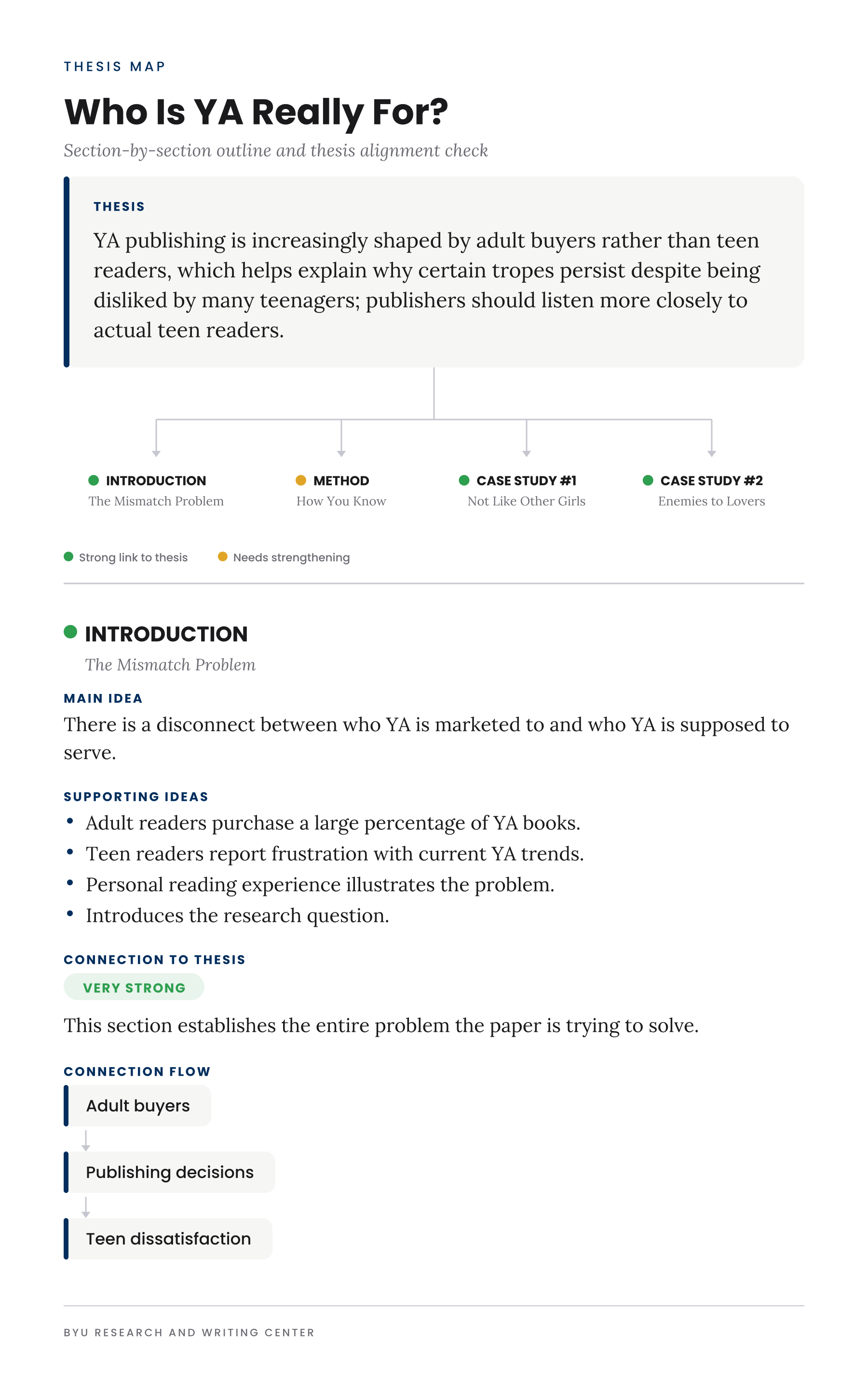
For an RWC tutor, this prompt gave a visual tree of her paper’s ideas with explanations for each. She could then see where to focus her attention when rethinking her outline, based on how each idea connected to her thesis and how they connected together. She could see that she needed more description and tie in to her thesis in the Methods section.
Analyze the assignment description and highlight the key requirements
Before you begin outlining or drafting, you can use an AI model to make sure you fully understand the assignment by giving it the assignment description and rubric. The AI model can interpret the assignment and give you pointers on things that you need to include or things that you could avoid. Here’s an example prompt:
I have a paper due for [course]. Here is the assignment description: [paste it].
Before I start writing, help me understand what is really being asked:
1. What is the core question or task? (State it in one sentence.)
2. What does my professor actually want to see? (Based on the assignment description, what would distinguish an A paper from a B paper?)
3. What common mistakes do students make on assignments like this?
4. What skills or concepts from the course is this assignment designed to test?
5. What is the implied argument structure? (Is this a compare/contrast? A cause/effect analysis? A policy recommendation? An argument for a position?)
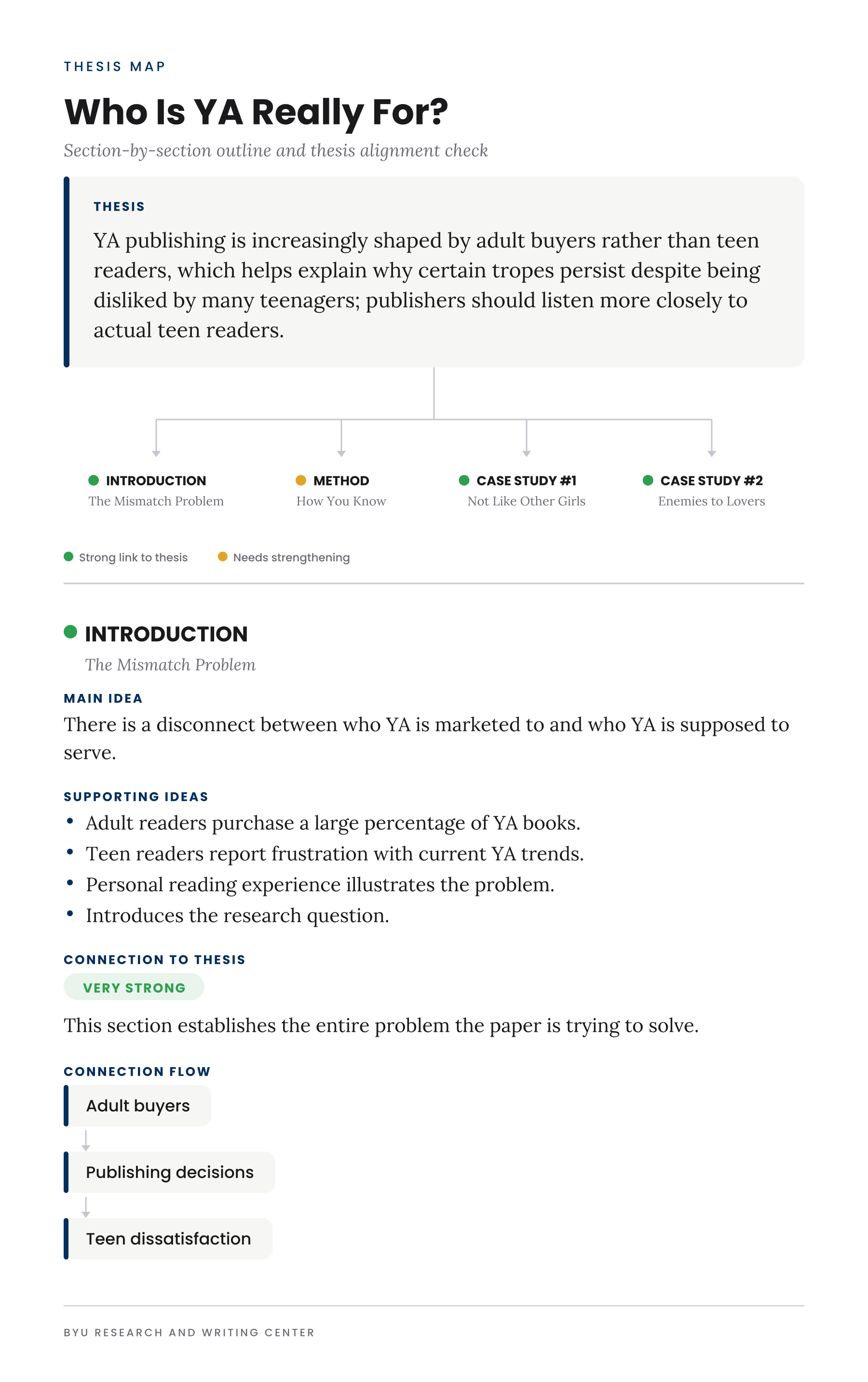
Our RWC tutor used this prompt, and was able to hone in on the assignment’s requirement for inquiry rather than persuasion, which shapes the way she’ll approach the essay.
AI as a research tool
Research is often an important part of the writing process, and Gen AI programs can be very helpful with this step, but there are a few important things to consider when using them for research. While there are some AI programs designed specifically to help with academic research that have access to databases and other sources of credible information, most general-purpose Gen AI programs like ChatGPT do not. If asked to provide sources of information, these AI will provide nonexistent or inaccurate sources.
Once you find sources, these programs can be very useful in helping you understand these sources. Some programs allow you to upload documents into the chat, and you can then ask the AI to summarize the main points of an article or find more specific information. You can also ask it to explain difficult concepts in an article to make sure you understand what it is saying. This can be helpful for quickly determining if a source is relevant to your topic and understanding the basic concepts, but if you decide to use it in your paper, make sure to go back in and read the article (at least parts of it) for yourself to ensure that you are representing its information accurately.
AI will want to generate paragraphs for you if you choose to use it in the drafting stage of your writing. This is usually against assignment guidelines and can prevent you from knowledge development and growth—simply put, if you do the work yourself, you'll understand your the content more deeply.
To avoid giving your brain over to AI during the drafting stage, think of AI as a GPS. It can help keep your writing on track and, as necessary, help you break through writer’s block.
Here are some things to help you do this!
- Continuity?
- Unexplored ideas? What’s next (providing a list!)
- Am I getting off track?
- Mind map progress?
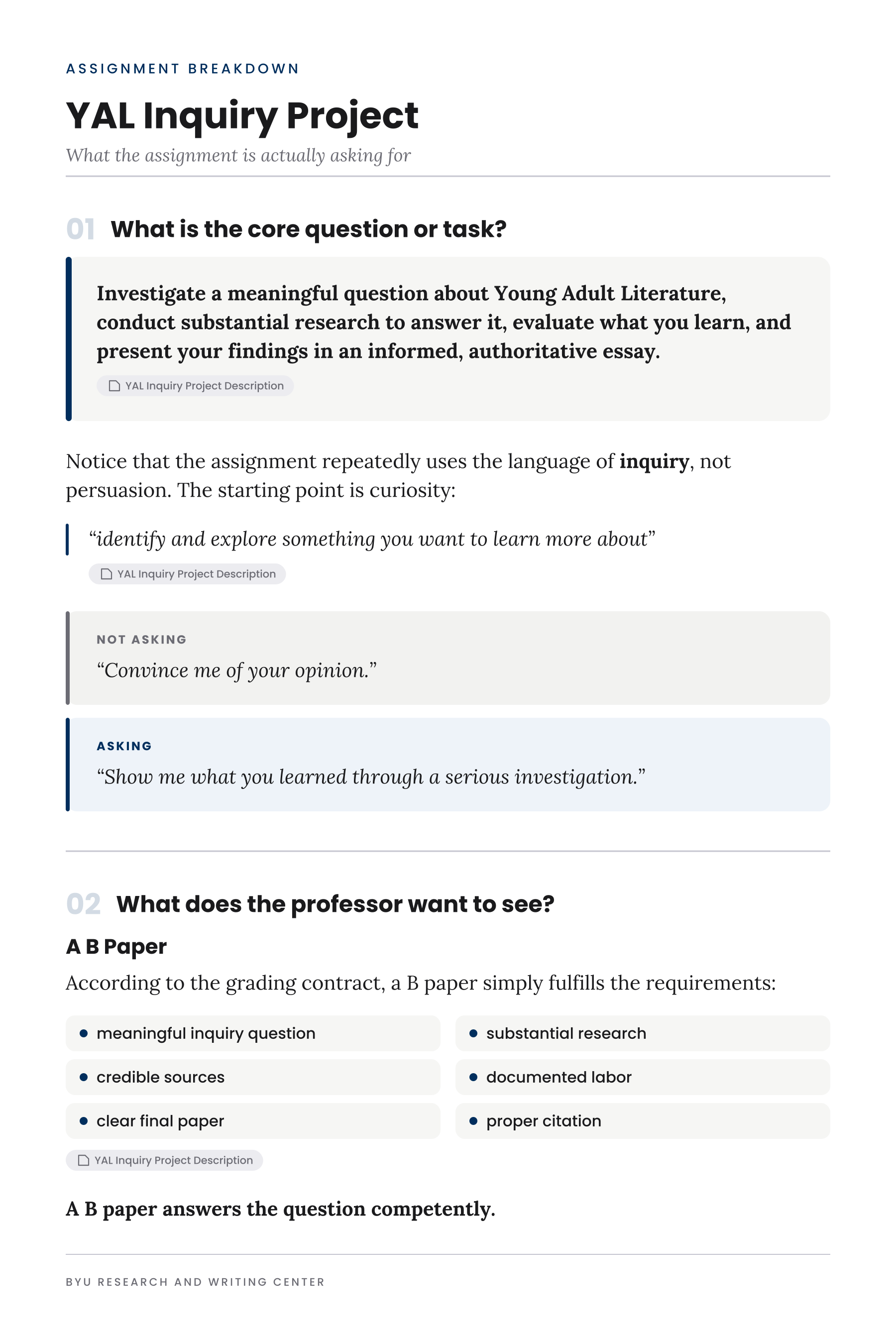
Example using Claude:
Student prompt:
I'm drafting a personal statement for this prompt: "Based on the professional interests selected above, explain how your current education (such as course work, emphasis, minor, or certificate), academic experiences (including research or student clubs), and/or community involvement are helping you prepare for a future in this field."
Here is what I have so far: My current coursework is a combination of Mechanical Engineering and pre-med which has prepared me for academic conversations in the Biomedical and Engineering fields respectively. In my major, I have worked on projects that involve mechatronic systems, CAD, numerical methods, material selection, and dynamic systems modeling. Outside of class, I have participated in the 2ft Prosthetics club at BYU including a 3D printed foot competition (2nd place), fundraising for the annual humanitarian trip to the Dominican Republic, and fabricating prosthetic components and treating patients at the Asociación Dominicana de Rehabilitación clinic in Santo Domingo. In my research work, I have learned sterile technique through working in a fungi and bacteria lab. I also learned how to initiate and establish a research project from the ground up---folding mechanisms for optimizing material properties of mycelium composites---and how to collect and interpret empirical results for publication. In my job at the campus Research and Writing Center, I worked on research to improve the tutoring experience for multilingual writers.
I'm stuck trying to figure out what is most meaningful to write next. Can we do a concise check in on current track of this draft? I'm interested in:
Continuity
Unexplored ideas? What’s next (provide a list of possible options!)
Am I getting off track?
Mind map progress
Claude's Response:
Just like with prewriting and drafting, AI can help you dive in to your ideas during the revising stage of your writing process. Here are some examples!
Argument map
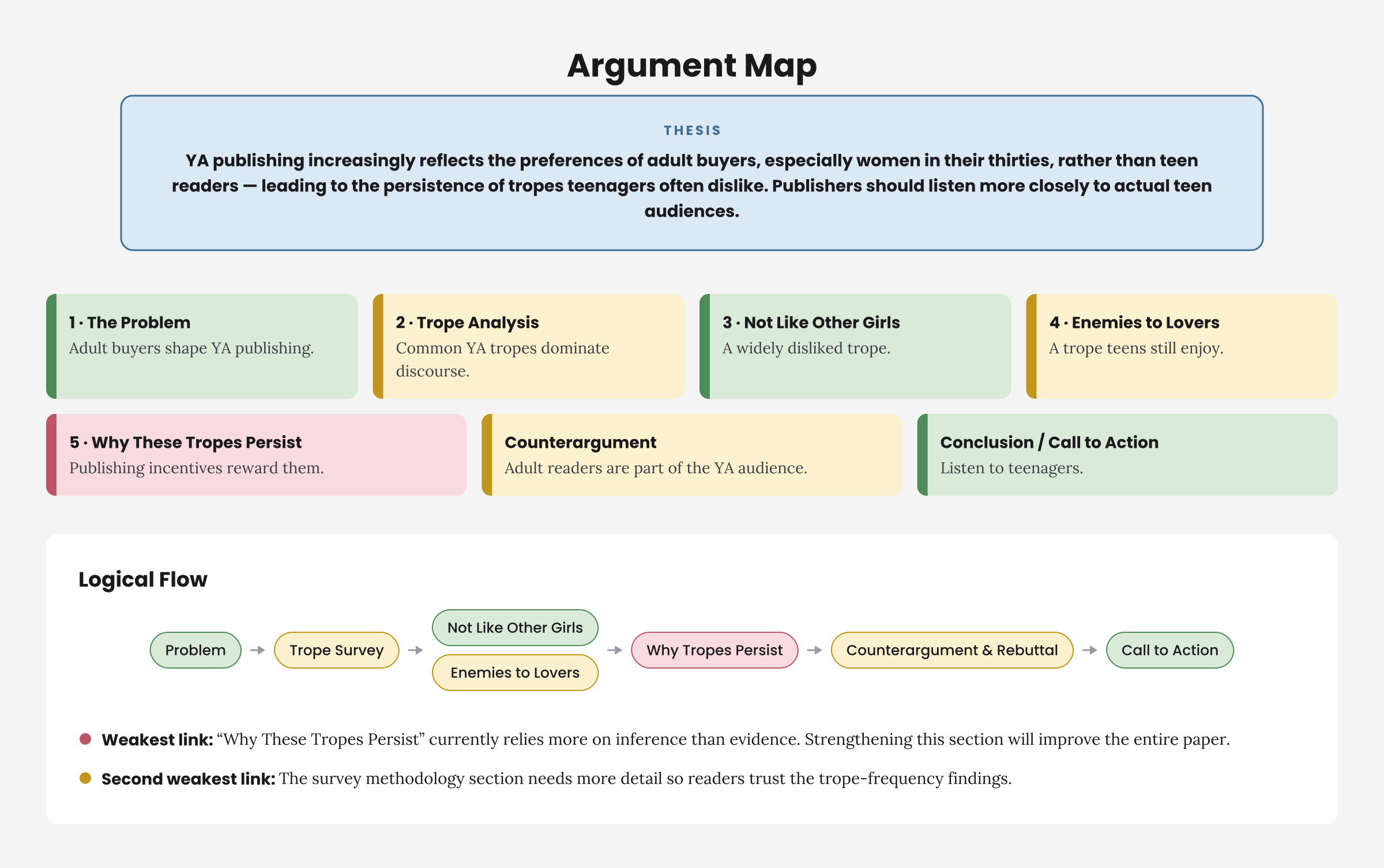
AI can build maps to track your arguments, helping you see where you may need more evidence and where you may have (accidentally) slipped in a few logical fallacies. The prompt may look like this:
Build me an interactive argument map for my paper as a visual artifact.
1. Show my thesis at the top.
2. Show each major section as a branch, with its main claim and supporting evidence.
3. Show where counterarguments fit and how I address them.
4. Color-code the strength of each section: green for well-supported, yellow for adequate, red for needs more evidence.
5. Draw the logical connections between sections so I can see the flow of the argument.
I want to be able to click on any section to see the details. This should help me spot where the structure is weak before I start drafting.
One of our RWC tutors used this prompt to see which of her sections were strong and which were unsupported. Here, we can visually see that Section 5 didn’t have much solid evidence, and that several of her other sections needed further support as well.
LIMITATIONS OF GEN AI
AI doesn’t know everything
While Generative AI can provide lots of useful content and information, like any other Internet source, that information must be verified. Unlike many other sources on the Internet, the users of Gen AI have no idea where a piece of information is coming from—sometimes it comes from nowhere at all! Researchers have collected examples of a vast array of errors made by ChatGPT to make improvements to the program and help users be aware of possible flaws. Besides outright errors, there are still lots of areas where AI can’t yet compete with humans. Gen AI is constantly improving, but it is important to be aware of what limitations it still possesses.
AI “hallucinations”
Because of how the large language models used by Gen AI programs are trained, when asked about factual information, a program’s responses are not based on any given source of information, credible or not. Instead, the program predicts the response based on the data it was trained on. This can lead the AI to “hallucinate,” or invent false information that it presents to the user as fact. These responses may sound very authoritative and are often correct, but there is never a guarantee of accuracy, particularly with certain programs. Any factual information given by Gen AI should be checked against a credible source, and if you want to include that information in an essay, cite that source, not the AI.
Logic errors
Computer programs can do a lot of amazing things that human brains can’t, but there are also a lot of intellectual tasks they have yet to master. AI can’t reliably understand human logic and reasoning, which often becomes important in academic writing. AI-generated text may take logical leaps, misinterpret information, or ignore relevant parts of the prompt they are given. When working on the argument and reasoning of an essay, it is best to get help from another human, whether a friend, classmate, or an RWC tutor!
Lack of emotion and poor persuasion
Perhaps unsurprisingly, one thing computers aren’t great at is understanding and expressing human emotion. This doesn’t matter much when writing something like an informational research report, but when writing is intended to persuade, emotions become very important. AI is not yet able to craft the kind of sophisticated emotional appeals that work best to persuade many human audiences, and they certainly lack the understanding of human nature that it takes to effectively analyze an audience in order to determine the most effective rhetorical strategy for convincing them of something. If you want to know whether your writing is persuasive, or how effective emotional appeals are in any piece of writing, you may want to seek out a human opinion.
Biases and over-corrections
Because AI programs are trained on human-produced data (much of which is taken unfiltered from the Internet), they are susceptible to the same kinds of biases humans are. While many programs are consistently updated to help them avoid offensive language and ideas, they will never be perfect. In some cases, their directions to avoid being biased or offensive causes them to over-correct, creating new problems. For example, in order to avoid perpetuating the idea that women are not fit for leadership positions, when asked what gender the first female president of the United States would be, ChatGPT responded that it could not predict the gender because people of any gender are capable of being president. While this example is an obvious case of a flaw in the AI’s programming, other issues of bias and over-correction may be less obvious, especially if you haven’t done your own research on the topic first.
Boring writing!
Finally, a lot of the writing produced by Gen AI is perfectly correct, but also very uninteresting to read. Gen AI often produces writing with an advanced vocabulary that is otherwise quite simple and formulaic. In order to get the most out of a piece of writing, good writers consider the impact the writing will have on their audience. In order to make your writing fitting and engaging for your audience, you may need to ask Gen AI for multiple drafts, tweak the prompt you give the program, and do thoughtful editing of your own by yourself or with a trusted peer, such as an RWC tutor.
Here are some resources for citing generated material:
Ready to talk to one of our consultants about your writing? Here are some potential questions to bring to the center!
- Am I following course policies on AI appropriately?
- Would AI help strengthen my writing project? Which uses of AI would be the most productive?
- What are the risks associated with using AI in this situation? Am I addressing those risks adequately?
MORE RESOURCES
- BYU’s Generative AI Site — updated policies, guidelines, etc.
- Using Chat GPT Ethically - New York Times
- Using ChatGPT to Improve, Not Replace, Your Writing - WIRED
- Large Language Models Explained - UnderstandingAI.org
- ChatGPT and Privacy Issues - MakeUseOf.com
- Student Guide to Generative AI - Center for Engaged Pedagogy